
Over the past several years, we’ve noticed a dramatic increase in the number of “virtual” offices for data recovery providers — and in the vast majority of cases, these offices aren’t explicitly advertised as “virtual.”
Here’s what happens: You search for data recovery in your area, and you’re presented with a list of local addresses. But some of those addresses are just mailing offices — they’re not staffed with actual data recovery engineers, and they immediately forward your case to a central lab (which is sometimes hundreds or even thousands of miles away).
This is legal, but unethical. It’s certainly against the terms of service for Google and other search engines, but unfortunately, those companies don’t have a strong incentive to take action — even when provided with video proof of the bad business practices, search engines will not remove the questionable listings.
The Problem with Virtual Mailing Offices
So, what’s the big deal? If a data recovery company uses virtual suites or mailing offices to create a fake local presence, at least your data still gets to a professional laboratory — right?
Yes, but there are serious points of concern:
- If a data recovery firm won’t identify its offices as “virtual” or as “mailing hubs,” they’re intentionally hiding how their business works. What else are they being dishonest about?
- Sending a drive to a drop-off point adds unnecessary shipping steps. It increases the risk of physical damage or a lost package, particularly for hard drives.
- Many people look for a local data recovery provider in order to manage downtime. If your case is being shipped across the country, you’re going to incur some extra downtime, period.
Why Real Data Recovery Labs Are Hard to Maintain
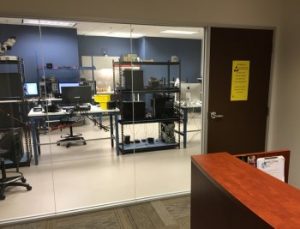
Professional recovery gear is expensive, so it is virtually impossible to have a fully equipped lab in every city. Complex tasks like firmware repair require high-end tools that must be physically onsite to work; certified cleanrooms are necessary for physical media repairs, and they require regular upkeep and re-certification.
It’s not financially feasible to operate real laboratories in every city in every state — but we’ve seen companies claim to have that capacity.
We believe that honesty is exceptionally important in the data recovery industry. This may sound slightly dramatic, but we’re dealing with peoples’ lives — every day, we recover priceless personal photos, mission-critical business data, and irreplaceable memories. When companies begin the process by misleading customers about their location, we see that as a major red flag.
Trust the World Leader in Data Recovery
Every one of our listed locations is a fully outfitted, fully staffed laboratory. While we will occasionally need to transfer cases between labs under highly specific circumstances (for instance, for certain data tape cases involving rare legacy media), we always inform our clients before taking that step.
With decades of experience in the industry, we’re able to offer exceptional turnaround times, risk-free evaluations, and an extensive no data, no charge guarantee: For standard data recovery cases, if we’re unable to restore the files you need, there’s no charge for the attempt.
When evaluating data recovery providers, we recommend asking questions:
- Are your laboratories onsite?
- Can I see pictures of the local laboratory or schedule a tour?
- Does the local laboratory have a cleanroom?
- Do you have firmware repair tools?
- What is your policy for sending media between laboratories/locations?
If you’ve lost data from a hard drive, SSD, RAID, or any other device or system, we’re here to help. Set up a risk-free evaluation online or call 1-800-237-4200 to speak with an expert.