
 You need to recover files from a hard drive, solid-state drive (SSD), USB stick, RAID array, or some other type of storage device — but you’re not sure what to do next. Logically, you know that you’ll need to work with a professional data recovery company.
How can you make sure that you’re getting a fair price? More importantly, how can you ensure that you’re trusting your data to a capable team?
Granted, you’re reading this article on the website of a professional data recovery company, so we want to acknowledge right away that we’re somewhat biased. However, we’ve also built our reputation by providing upfront pricing, high recovery rates, and reliable turnaround times; read our testimonials to learn more.
Whether or not you use our services, we want to help you optimize your chances of a successful recovery. To that end, here are 5 common data recovery scams that we’ve seen over the years, along with some basic tips for evaluating professional data recovery firms.
To discuss your case with an expert, call us at 1-800-237-4200 or submit a ticket online
1. The $200 (or $300, or $400) “Guaranteed” Recovery
When you’ve lost data, you want quick answers: Is my data recoverable? How long will it take to get it back? What will it cost?
Some data recovery companies take advantage of customer anxieties by answering that last question upfront: They charge flat-rate pricing for hard drives, solid-state drives, and other consumer-grade media.
The problem is that some data recovery cases are extremely simple, while others are quite complex. Some hard drives require treatment in a certified Class 100 cleanroom; others can be fixed with software (note: don’t try data recovery software as a first course of action).
You wouldn’t trust an auto mechanic who advertised “$100 auto repairs.” No data recovery provider can diagnose an issue without a thorough evaluation.
So, is flat-rate pricing always a scam? Not necessarily. Some storage devices have extremely simple designs — for example, floppy disks or standardized USB memory sticks — and the data recovery process will go through a limited, predictable number of steps.
But if a provider charges flat-rate pricing for hard drives or SSDs, there’s a good chance that they’re using basic logical (software-based) techniques. Those techniques can cause permanent data loss in certain circumstances.
Related: The Problem with Flat-Rate Hard Drive Data Recovery
2. The “Locations in Every State” Scam
To operate a professional data recovery company, you need to invest heavily in research and development. You need cleanroom technology, firmware repair equipment, and engineers with sufficient experience with dozens of filesystems and media technologies.
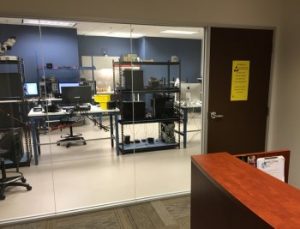
We operate labs at each location; most data recovery businesses operate one laboratory. But it’s completely impractical to run laboratories in every major city.
Some businesses operate mailing offices, which are exactly what they sound like — they’re generally staffed by one person, whose only job is to interact with the customer and mail their device to the actual laboratory. We have no issue with this business model; however, we believe that data recovery companies must be upfront with their customer about where the actual data recovery process will be performed.
If a business tries to hide the fact that they’re operating mailing offices, that’s a good indication that they’ll hide other aspects of their service.
3. Evaluation Fees (With an Important Caveat)
Evaluating a device requires some work, so it’s reasonable to charge evaluation fees — particularly for RAID arrays and other storage systems that require several hours of analysis prior to data recovery.
However, evaluation fees should be aligned with the work. If the evaluation fee constitutes more than 10% of the total quote, the data recovery firm has little incentive to actually attempt the recovery.
Before sending your device to a data recovery company, make sure to ask for a full list of all potential charges. At Datarecovery.com, we provide risk-free evaluations for most types of storage devices. For emergency cases, we assess evaluation fees, but those are wholly independent from the recovery fee — and we support all cases with a no data, no charge guarantee, which ensures that you only pay if we recover what you need.
4. Hidden Parts Fees and Deposit Traps
Some providers quote a low labor price only to demand expensive, non-refundable parts fees a few days later. Those fees are often a primary revenue stream; the company can profit even when the recovery attempt fails.
A reputable firm should maintain an extensive inventory of donor components and should be upfront about any costs associated with the recovery process before you agree to the work. We recommend asking if a parts fee is required regardless of the recovery outcome.
Related: A Look Inside Datarecovery.com’s Hard Drive Parts Inventory
Trust the Leaders in Data Recovery
Choosing a data recovery provider requires balancing technical capability with business ethics. Our approach focuses on removing the financial risk for the customer while providing the highest level of engineering expertise available.
- Risk-Free Evaluations: Most devices qualify for a diagnostic at no cost to determine the extent of the damage.
- Purpose-Built Systems: Our engineers use proprietary hardware and software tools developed in-house to handle complex storage architectures.
- No Data, No Charge Guarantee: You are only responsible for the recovery fee if we successfully retrieve the specific files you need.
- True Laboratory Access: We operate actual facilities where the work is performed, providing a transparent chain of custody for your sensitive information.
To discuss your case with an expert or to begin the recovery process, submit a case online or call us at 1-800-237-4200.